build 7bbbddf7 | content blog-content@c8490fa · 338 posts | profiles 20 · corpus 267 | 0 skipped | | format
apiVersion: soultec.ch/v1kind: Postmetadata: name: block-specific-notifications-in-windows-10-11 locale: en labels: author: raphael-thommen capability/modern-workplace: 2.11 capability/virtualization: 1.37 vendor/omnissa: 2.39 vendor/vmware: 0.88 annotations: source: blog-content/posts/en/block-specific-notifications-in-windows-10-11.md route: /en/insights/block-specific-notifications-in-windows-10-11/ schema: /nerd/schema/posts.json markdown: /en/insights/block-specific-notifications-in-windows-10-11.mdspec: title: Block specific Notifications in Windows 10 & 11 date: 2023-09-10 author: raphael-thommen locale: en summary: >- In a VDI environment there is nothing more irritating for a user than getting the same notifications and popups at every logon, none of which interest them. capabilities: [modern-workplace, virtualization] vendors: [omnissa, vmware] hero: /blog-assets/block-specific-notifications-in-windows-10-11/hero.webp migrated: 2026-08-24 translationReviewed: false draft: false sections: - body: | In a VDI environment there is, in my opinion, nothing more irritating for a user than getting the same messages and popups at every logon, none of which interest them in the slightest. There are countless guides for fixing this. Many of them simply recommend turning toast notifications off. That also kills the useful ones, such as the Outlook mail preview notification, so it is not a good answer. A far more elegant, if slightly more laborious, route is to define exactly which applications may send notifications and which may not. This post does it with [DEM](https://soultec.ch/solutions/vmware/horizon-view/vmware-dynamic-environment-manager/). It works the same way with GPOs, since they set the same registry keys. - heading:

The starting point

body: | We get several notifications that irritate the end user. The screenshot shows the restart notification. Alongside it, AutoDesk and "System and Maintenance" show notifications daily. Those should be disabled specifically, while other notifications stay allowed. ![restart required notification](/blog-assets/block-specific-notifications-in-windows-10-11/01.webp) - heading:

Implementing the solution

body: | Create a new entry under "Registry Settings". ![create new registry entry](/blog-assets/block-specific-notifications-in-windows-10-11/02.webp) Give it a name and click "Edit". ![registry entry](/blog-assets/block-specific-notifications-in-windows-10-11/03.webp) In this example these settings were used: - "Autodesk.Access" (the AutoDesk application) - "Windows.immersivecontrolpanel" (the daily restart notification) - "SecurityMaintenance" (a daily notification) The registry settings then look like this: ![registry settings](/blog-assets/block-specific-notifications-in-windows-10-11/04.webp) And that is the registry configuration done: ![registry settings completed](/blog-assets/block-specific-notifications-in-windows-10-11/05.webp) After the next logon the settings are active and user satisfaction has gone up. ![notifications in Windows after a new logon](/blog-assets/block-specific-notifications-in-windows-10-11/06.webp) So in Windows 10 and Windows 11 you can suppress notifications from individual applications, and only those. - heading:

Next steps

body: | If this interests you and you want to know more about workspace optimisation, do not hesitate to [get in touch](https://soultec.ch/contact-us/).status: corpus: 267 alsoLike: - {ref: posts/soultec-ag-erreicht-hochsten-omnissa-partnerstatus, score: 1.00} - {ref: posts/ubersicht-omnissa-horizon-fur-citrix-kunden, score: 1.00} - {ref: solutions/omnissa/horizon/omnissa-app-volumes, score: 1.00}
{ "apiVersion": "soultec.ch/v1", "kind": "Post", "metadata": { "name": "block-specific-notifications-in-windows-10-11", "locale": "en", "labels": { "author": "raphael-thommen", "capability/modern-workplace": "2.11", "capability/virtualization": "1.37", "vendor/omnissa": "2.39", "vendor/vmware": "0.88" }, "annotations": { "source": "blog-content/posts/en/block-specific-notifications-in-windows-10-11.md", "route": "/en/insights/block-specific-notifications-in-windows-10-11/", "schema": "/nerd/schema/posts.json", "markdown": "/en/insights/block-specific-notifications-in-windows-10-11.md" } }, "spec": { "title": "Block specific Notifications in Windows 10 & 11", "date": "2023-09-10", "author": "raphael-thommen", "locale": "en", "summary": "In a VDI environment there is nothing more irritating for a user than getting the same notifications and popups at every logon, none of which interest them.", "capabilities": [ "modern-workplace", "virtualization" ], "vendors": [ "omnissa", "vmware" ], "hero": "/blog-assets/block-specific-notifications-in-windows-10-11/hero.webp", "migrated": "2026-08-24", "translationReviewed": false, "draft": false }, "sections": [ { "body": "In a VDI environment there is, in my opinion, nothing more irritating for a user than getting the same messages and popups at every logon, none of which interest them in the slightest.\n\nThere are countless guides for fixing this. Many of them simply recommend turning toast notifications off. That also kills the useful ones, such as the Outlook mail preview notification, so it is not a good answer.\n\nA far more elegant, if slightly more laborious, route is to define exactly which applications may send notifications and which may not. This post does it with [DEM](https://soultec.ch/solutions/vmware/horizon-view/vmware-dynamic-environment-manager/). It works the same way with GPOs, since they set the same registry keys." }, { "heading": "

The starting point

",
"body": "We get several notifications that irritate the end user. The screenshot shows the restart notification. Alongside it, AutoDesk and \"System and Maintenance\" show notifications daily. Those should be disabled specifically, while other notifications stay allowed.\n\n![restart required notification](/blog-assets/block-specific-notifications-in-windows-10-11/01.webp)" }, { "heading": "

Implementing the solution

",
"body": "Create a new entry under \"Registry Settings\".\n\n![create new registry entry](/blog-assets/block-specific-notifications-in-windows-10-11/02.webp)\n\nGive it a name and click \"Edit\".\n\n![registry entry](/blog-assets/block-specific-notifications-in-windows-10-11/03.webp)\n\nIn this example these settings were used:\n\n- \"Autodesk.Access\" (the AutoDesk application)\n- \"Windows.immersivecontrolpanel\" (the daily restart notification)\n- \"SecurityMaintenance\" (a daily notification)\n\nThe registry settings then look like this:\n\n![registry settings](/blog-assets/block-specific-notifications-in-windows-10-11/04.webp)\n\nAnd that is the registry configuration done:\n\n![registry settings completed](/blog-assets/block-specific-notifications-in-windows-10-11/05.webp)\n\nAfter the next logon the settings are active and user satisfaction has gone up.\n\n![notifications in Windows after a new logon](/blog-assets/block-specific-notifications-in-windows-10-11/06.webp)\n\nSo in Windows 10 and Windows 11 you can suppress notifications from individual applications, and only those." }, { "heading": "

Next steps

",
"body": "If this interests you and you want to know more about workspace optimisation, do not hesitate to [get in touch](https://soultec.ch/contact-us/)." } ], "status": { "corpus": 267, "alsoLike": [ { "ref": "posts/soultec-ag-erreicht-hochsten-omnissa-partnerstatus", "score": "1.00" }, { "ref": "posts/ubersicht-omnissa-horizon-fur-citrix-kunden", "score": "1.00" }, { "ref": "solutions/omnissa/horizon/omnissa-app-volumes", "score": "1.00" } ] }}
apiVersion = "soultec.ch/v1"kind = "Post"[metadata]name = "block-specific-notifications-in-windows-10-11"locale = "en"[metadata.labels]author = "raphael-thommen""capability/modern-workplace" = "2.11""capability/virtualization" = "1.37""vendor/omnissa" = "2.39""vendor/vmware" = "0.88"[metadata.annotations]source = "blog-content/posts/en/block-specific-notifications-in-windows-10-11.md"route = "/en/insights/block-specific-notifications-in-windows-10-11/"schema = "/nerd/schema/posts.json"markdown = "/en/insights/block-specific-notifications-in-windows-10-11.md"[spec]title = "Block specific Notifications in Windows 10 & 11"date = 2023-09-10author = "raphael-thommen"locale = "en"summary = "In a VDI environment there is nothing more irritating for a user than getting the same notifications and popups at every logon, none of which interest them."capabilities = ["modern-workplace", "virtualization"]vendors = ["omnissa", "vmware"]hero = "/blog-assets/block-specific-notifications-in-windows-10-11/hero.webp"migrated = 2026-08-24translationReviewed = falsedraft = false[[sections]]body = '''In a VDI environment there is, in my opinion, nothing more irritating for a user than getting the same messages and popups at every logon, none of which interest them in the slightest.There are countless guides for fixing this. Many of them simply recommend turning toast notifications off. That also kills the useful ones, such as the Outlook mail preview notification, so it is not a good answer.A far more elegant, if slightly more laborious, route is to define exactly which applications may send notifications and which may not. This post does it with [DEM](https://soultec.ch/solutions/vmware/horizon-view/vmware-dynamic-environment-manager/). It works the same way with GPOs, since they set the same registry keys.'''[[sections]]heading = "

The starting point

"
body = '''We get several notifications that irritate the end user. The screenshot shows the restart notification. Alongside it, AutoDesk and "System and Maintenance" show notifications daily. Those should be disabled specifically, while other notifications stay allowed.![restart required notification](/blog-assets/block-specific-notifications-in-windows-10-11/01.webp)'''[[sections]]heading = "

Implementing the solution

"
body = '''Create a new entry under "Registry Settings".![create new registry entry](/blog-assets/block-specific-notifications-in-windows-10-11/02.webp)Give it a name and click "Edit".![registry entry](/blog-assets/block-specific-notifications-in-windows-10-11/03.webp)In this example these settings were used:- "Autodesk.Access" (the AutoDesk application)- "Windows.immersivecontrolpanel" (the daily restart notification)- "SecurityMaintenance" (a daily notification)The registry settings then look like this:![registry settings](/blog-assets/block-specific-notifications-in-windows-10-11/04.webp)And that is the registry configuration done:![registry settings completed](/blog-assets/block-specific-notifications-in-windows-10-11/05.webp)After the next logon the settings are active and user satisfaction has gone up.![notifications in Windows after a new logon](/blog-assets/block-specific-notifications-in-windows-10-11/06.webp)So in Windows 10 and Windows 11 you can suppress notifications from individual applications, and only those.'''[[sections]]heading = "

Next steps

"
body = "If this interests you and you want to know more about workspace optimisation, do not hesitate to [get in touch](https://soultec.ch/contact-us/)."[status]corpus = 267[[status.alsoLike]]ref = "posts/soultec-ag-erreicht-hochsten-omnissa-partnerstatus"score = "1.00"[[status.alsoLike]]ref = "posts/ubersicht-omnissa-horizon-fur-citrix-kunden"score = "1.00"[[status.alsoLike]]ref = "solutions/omnissa/horizon/omnissa-app-volumes"score = "1.00"
<?xml version="1.0" encoding="UTF-8"?><manifest kind="Post"> <apiVersion>soultec.ch/v1</apiVersion> <metadata> <name>block-specific-notifications-in-windows-10-11</name> <locale>en</locale> <labels> <author>raphael-thommen</author> <entry key="capability/modern-workplace">2.11</entry> <entry key="capability/virtualization">1.37</entry> <entry key="vendor/omnissa">2.39</entry> <entry key="vendor/vmware">0.88</entry> </labels> <annotations> <source>blog-content/posts/en/block-specific-notifications-in-windows-10-11.md</source> <route>/en/insights/block-specific-notifications-in-windows-10-11/</route> <schema>/nerd/schema/posts.json</schema> <markdown>/en/insights/block-specific-notifications-in-windows-10-11.md</markdown> </annotations> </metadata> <spec> <title>Block specific Notifications in Windows 10 &amp; 11</title> <date>2023-09-10</date> <author>raphael-thommen</author> <locale>en</locale> <summary>In a VDI environment there is nothing more irritating for a user than getting the same notifications and popups at every logon, none of which interest them.</summary> <capabilities> <item>modern-workplace</item> <item>virtualization</item> </capabilities> <vendors> <item>omnissa</item> <item>vmware</item> </vendors> <hero>/blog-assets/block-specific-notifications-in-windows-10-11/hero.webp</hero> <migrated>2026-08-24</migrated> <translationReviewed>false</translationReviewed> <draft>false</draft> </spec> <sections> <section> <body>In a VDI environment there is, in my opinion, nothing more irritating for a user than getting the same messages and popups at every logon, none of which interest them in the slightest.There are countless guides for fixing this. Many of them simply recommend turning toast notifications off. That also kills the useful ones, such as the Outlook mail preview notification, so it is not a good answer.A far more elegant, if slightly more laborious, route is to define exactly which applications may send notifications and which may not. This post does it with [DEM](https://soultec.ch/solutions/vmware/horizon-view/vmware-dynamic-environment-manager/). It works the same way with GPOs, since they set the same registry keys. </body> </section> <section> <heading>

The starting point

</heading>
<body>We get several notifications that irritate the end user. The screenshot shows the restart notification. Alongside it, AutoDesk and "System and Maintenance" show notifications daily. Those should be disabled specifically, while other notifications stay allowed.![restart required notification](/blog-assets/block-specific-notifications-in-windows-10-11/01.webp) </body> </section> <section> <heading>

Implementing the solution

</heading>
<body>Create a new entry under "Registry Settings".![create new registry entry](/blog-assets/block-specific-notifications-in-windows-10-11/02.webp)Give it a name and click "Edit".![registry entry](/blog-assets/block-specific-notifications-in-windows-10-11/03.webp)In this example these settings were used:- "Autodesk.Access" (the AutoDesk application)- "Windows.immersivecontrolpanel" (the daily restart notification)- "SecurityMaintenance" (a daily notification)The registry settings then look like this:![registry settings](/blog-assets/block-specific-notifications-in-windows-10-11/04.webp)And that is the registry configuration done:![registry settings completed](/blog-assets/block-specific-notifications-in-windows-10-11/05.webp)After the next logon the settings are active and user satisfaction has gone up.![notifications in Windows after a new logon](/blog-assets/block-specific-notifications-in-windows-10-11/06.webp)So in Windows 10 and Windows 11 you can suppress notifications from individual applications, and only those. </body> </section> <section> <heading>

Next steps

</heading>
<body>If this interests you and you want to know more about workspace optimisation, do not hesitate to [get in touch](https://soultec.ch/contact-us/).</body> </section> </sections> <status> <corpus>267</corpus> <alsoLike> <item> <ref>posts/soultec-ag-erreicht-hochsten-omnissa-partnerstatus</ref> <score>1.00</score> </item> <item> <ref>posts/ubersicht-omnissa-horizon-fur-citrix-kunden</ref> <score>1.00</score> </item> <item> <ref>solutions/omnissa/horizon/omnissa-app-volumes</ref> <score>1.00</score> </item> </alsoLike> </status></manifest>
Post · 2023-09-10

Block specific Notifications in Windows 10 & 11

In a VDI environment there is nothing more irritating for a user than getting the same notifications and popups at every logon, none of which interest them.

2023-09-10Date
Raphael ThommenAuthor
1Min read
Topics Modern Workplace 2.11 Virtualization 1.37
Vendors Omnissa 2.39 VMware 0.88

In a VDI environment there is, in my opinion, nothing more irritating for a user than getting the same messages and popups at every logon, none of which interest them in the slightest.

There are countless guides for fixing this. Many of them simply recommend turning toast notifications off. That also kills the useful ones, such as the Outlook mail preview notification, so it is not a good answer.

A far more elegant, if slightly more laborious, route is to define exactly which applications may send notifications and which may not. This post does it with DEM. It works the same way with GPOs, since they set the same registry keys.

The starting point

We get several notifications that irritate the end user. The screenshot shows the restart notification. Alongside it, AutoDesk and “System and Maintenance” show notifications daily. Those should be disabled specifically, while other notifications stay allowed.
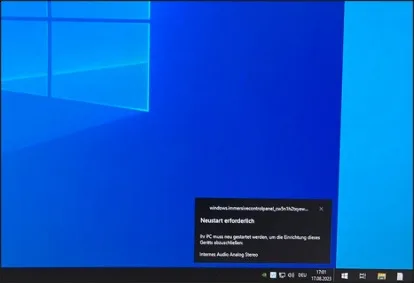
restart required notification

Implementing the solution

Create a new entry under “Registry Settings”.
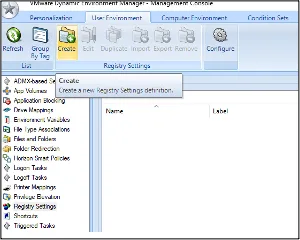
create new registry entry

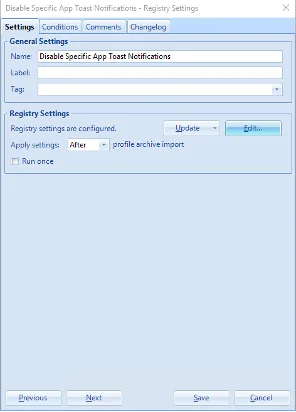
Give it a name and click “Edit”.

registry entry

In this example these settings were used:

  • “Autodesk.Access” (the AutoDesk application)
  • “Windows.immersivecontrolpanel” (the daily restart notification)
  • “SecurityMaintenance” (a daily notification)

The registry settings then look like this:
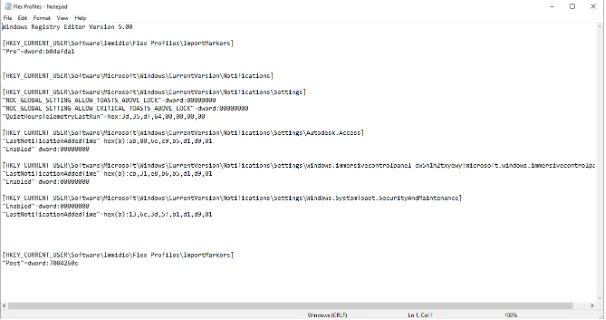
registry settings

And that is the registry configuration done:
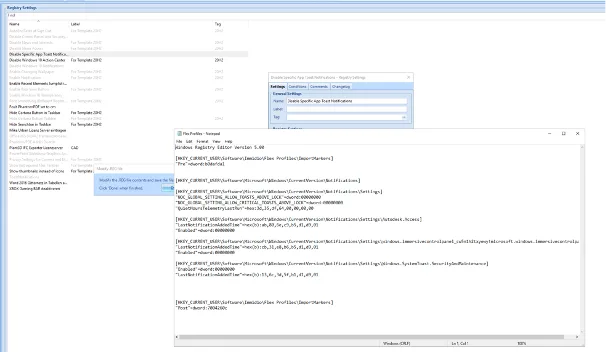
registry settings completed

After the next logon the settings are active and user satisfaction has gone up.
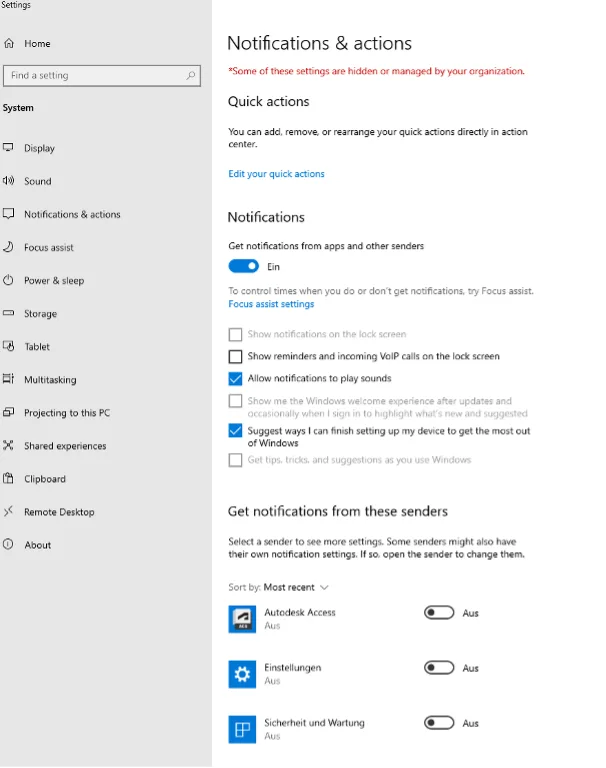
notifications in Windows after a new logon

So in Windows 10 and Windows 11 you can suppress notifications from individual applications, and only those.

Next steps

If this interests you and you want to know more about workspace optimisation, do not hesitate to get in touch.
You might also like